
Introduction
The digital economy has effectively erased global borders. Today, an entrepreneur sitting in London, Mumbai, or Sydney can seamlessly manage a highly profitable e-commerce operation serving customers in New York or Los Angeles. However, while the internet is borderless, financial institutions and digital marketplaces are not.
To access the lucrative US consumer market, open corporate bank accounts, and utilize major payment gateways like Stripe or PayPal, international founders often need a registered US business entity. For non-US residents, navigating the alphabet soup of American corporate structures—specifically LLCs, EINs, and ITINs—can feel overwhelming. This guide breaks down exactly what these entities are, why they are essential for global trade, and how they interact to legitimize your cross-border business.
1. The Core Structure: The US LLC
When international founders look to establish a US presence, the Limited Liability Company (LLC) is almost universally the preferred corporate structure.
Unlike a C-Corporation, which faces “double taxation” (the corporation is taxed on profits, and shareholders are taxed again on dividends), an LLC is typically treated as a “pass-through” entity. This means the LLC itself does not pay federal income taxes. Instead, the profits and losses pass through to the individual owners (called members).
Why it matters for Non-Residents: If a non-US resident forms a single-member LLC, and that LLC has no physical economic nexus in the US (meaning no physical office, US employees, or dependent agents), the income generated may not be subject to US federal income tax. This creates an incredibly tax-efficient vehicle for running dropshipping operations, digital storefronts, or consulting businesses.
Furthermore, the “Limited Liability” aspect ensures that if the business faces a lawsuit or debt, the founder’s personal assets (like their home or personal bank accounts in their home country) remain protected.
2. The Business Identity: The EIN
You can think of an Employer Identification Number (EIN) as a Social Security Number for your business. Issued by the Internal Revenue Service (IRS), it is a unique nine-digit number used to identify your business entity for tax and administrative purposes.
Why the EIN is Non-Negotiable: Simply registering an LLC with a state (like Wyoming or Delaware) is only step one. An LLC without an EIN is essentially a ghost; it cannot interact with the US financial system. You must obtain an EIN to:
- Open a US business bank account (such as Mercury or Wise).
- Apply for US-based payment processors.
- Comply with major digital marketplaces. For international sellers operating on platforms like Amazon, having a registered LLC with a valid EIN is a strict compliance requirement. If Amazon asks for tax identity verification, providing these documents is what keeps the seller account operational and in good standing.
Note for Non-Residents: You do not need a US Social Security Number (SSN) to apply for an EIN. The IRS allows foreign founders to apply by faxing or mailing a specific form (Form SS-4), though the process takes slightly longer than it does for US citizens.
3. The Personal Identity: The ITIN
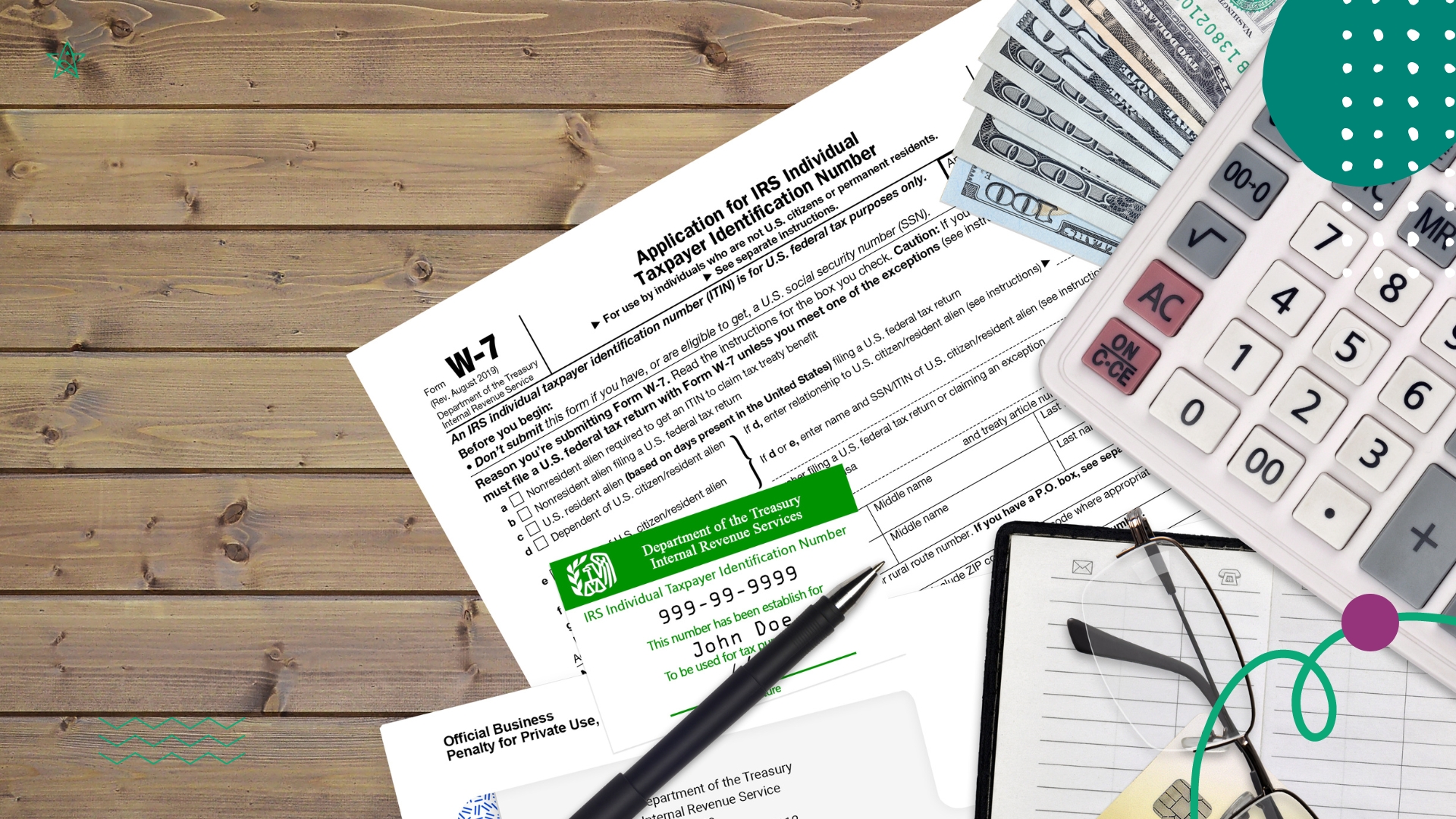
While the EIN identifies the business, the Individual Taxpayer Identification Number (ITIN) identifies the foreign individual who owns it.
An ITIN is issued by the IRS to individuals who are required to have a US taxpayer identification number but who do not have, and are not eligible to obtain, a Social Security Number.
Do you actually need an ITIN? Not always immediately, but it frequently becomes necessary as your business scales. If your LLC generates US-sourced income that requires you to file a US federal income tax return (even just an informational return like Form 1120-F or Form 5472), you will need an ITIN.
Additionally, many US banks and major payment processors are increasingly requiring foreign LLC owners to provide an ITIN as part of their stringent “Know Your Customer” (KYC) and Anti-Money Laundering (AML) compliance protocols. Securing an ITIN proactively ensures that your capital is not frozen by a payment gateway demanding further identity verification.
4. The Path Forward: Wyoming vs. Delaware
When non-residents form an LLC, they can choose any of the 50 US states. However, two states dominate the landscape for foreign founders:
- Wyoming: Highly favored by solo e-commerce entrepreneurs. Wyoming offers low state filing fees, zero state income tax, and exceptional privacy protection for LLC members.
- Delaware: The gold standard if your ultimate goal is to raise venture capital or take the company public. However, Delaware has higher franchise taxes and more complex compliance requirements, making it overkill for a standard Amazon FBM or Shopify business.
Conclusion
Establishing a US business entity as a non-resident is a powerful strategic move. It unlocks the world’s largest consumer market, provides access to elite banking infrastructure, and protects your personal assets. By understanding the distinct roles of the LLC (the protective shell), the EIN (the business identifier), and the ITIN (the personal identifier), international entrepreneurs can confidently navigate US compliance and focus on what truly matters: scaling their global operations